Building takes hours, not weeks
Claude Code, Cursor and similar tools write in an afternoon what used to take a sprint. Marketing, sales and founders now build their own tools. That is real progress.
Software and website maintenance on subscription
With AI, an application can be built in an afternoon. After that it has to run for years: up to date, secure, documented and understood by someone. DevAbo handles maintenance, updates and security for your websites, WordPress sites and applications, whether your team, an agency or an AI wrote the code.
Why now
Claude Code, Cursor and similar tools write in an afternoon what used to take a sprint. Marketing, sales and founders now build their own tools. That is real progress.
Internal tools, automations, landing pages and interfaces to the shop or the ERP system are often already in production. Many process customer data, and for many nobody is officially responsible.
Security researchers use AI too. OpenAI's “Patch the Planet” programme alone has reported hundreds of security issues in open-source software since June 2026. For every one of them, someone somewhere has to install an update.
Example: an application built with AI in one day and in use for five years. Building accounts for about 0.05 per cent of its lifetime.
October 2026
On 20 October 2026, two critical vulnerabilities in PHP were announced, CVE-2026-109618 and CVE-2026-109619. They affect versions 5.4 to 8.5 and can be exploited without logging in. PHP runs a large part of the web, from WordPress to the home-grown customer portal. Amazon dated a first attack attempt to 17 October, four days before the details were published.
Patches for PHP 8.2 to 8.5 arrived on 21 October. For 7.4, 8.0 and 8.1 there were only fixes in the source code and no ready-made packages, because these versions have reached end of life. Anyone who had put off updates was facing an emergency that day.
If you don't know your systems, you can't answer any of them. The next vulnerability will be the same, just in different software.
With DevAbo, every system we look after has an inventory of all its components and versions. When a vulnerability becomes known, we check it against that inventory, get in touch with findings and a plan, and install the patch once you approve. Afterwards we check the logs and record everything in the system dossier.
Sources, as of 22 October 2026: Wikipedia, BleepingComputer, Qualys, OpenAI on “Patch the Planet”
Maintenance, updates, security
Software needs someone who understands it, documents it, maintains it, secures it and develops it further. This work never ends. That is why DevAbo is a subscription.
We get to grips with your code, even if nobody can explain it any more. AI tools help us work through unfamiliar codebases in days rather than weeks.
Every system gets a system dossier: architecture, dependencies, data flows, where the credentials are kept and what to do in an emergency. It belongs to you and works for any other service provider too.
We plan updates for WordPress and plugins, frameworks, libraries and PHP or Node versions before a version expires. In small steps, tested, with a way back prepared.
We continuously check new security advisories against your component inventory. Every change gets a code review and follows our standard with 20 checkpoints.
We develop new features with AI at the pace you are now used to. With review, tests and documentation, so the system stays understandable after the next feature too.
What changes day to day
| Situation | Without clear responsibility | With DevAbo |
|---|---|---|
| A critical security vulnerability is published. | You hear about it in the news or from your hosting provider. Then the search begins for credentials and for someone who has time. | We check the advisory against your component inventory, get in touch with findings and a plan, and patch once you approve. |
| The person who built the system has left. | The knowledge leaves with them, and often the credentials too. | Everything important is in the system dossier. At least two of our developers know every system. |
| An update breaks something. | The site is offline, and nobody knows which change caused it. | Updates run on a test environment first. The way back is prepared, and every change is logged. |
| Your team has used AI to build a tool that now processes customer data. | Typical weaknesses: API keys in the browser code, unchecked access to other people's records, no backups. | We review it against our standard, close the gaps and add it to our maintenance. |
| A customer or auditor asks which data the system stores. | Someone goes looking for the answer in the code. | The answer is in the system dossier, with data flows and storage locations. |
Who it's for
A website, a shop, a customer portal, an interface to the ERP system and a few automations. Each system was built by someone else, and none is properly documented.
Starting pointAssessment
Marketing, sales or product teams build with Claude Code, Cursor or Lovable. We turn the result into something you can put in front of customers, and keep it that way.
Starting pointCode review and security fixes
You deliver faster than ever and don't want to maintain every project yourself for years. We take over maintenance and updates, under your name if you wish.
Starting pointPartner call
Your people should be working on the roadmap. We take over operations, updates and documentation for the systems that have to keep running alongside it.
Starting pointAssessment
Process
You tell us what you are running and what bothers you. We tell you honestly whether we are a good fit.
A health and security check of your software: we record systems, components and versions, review everything against our standard and rank the risks by urgency. You receive your first system dossier and a fixed price for maintenance. The results are yours, even if you don't continue with us.
Individual accounts with minimal permissions instead of shared passwords. We set up monitoring and backups and fix critical findings first.
Updates, ongoing checks of new security advisories, changes from your allowance and a monthly report that fits on one page. With a dedicated contact person in Mannheim.
Services
You pay for maintenance, not for a full-time position. You get your quote at a fixed price before you decide.
One-off
The health and security check for anyone who wants to know what they have first.
Fixed price, agreed in advance
Credited if you go on to book maintenance.
Monthly · Core service
For software that has to keep running.
Fixed monthly price
Minimum term 6 months, then cancellable monthly.
Request an assessmentMonthly
For ongoing development.
Monthly per developer
Minimum term 6 months, then cancellable monthly.
What determines the price: the number and type of systems, their condition when we take over, the response times you need and the change allowance.
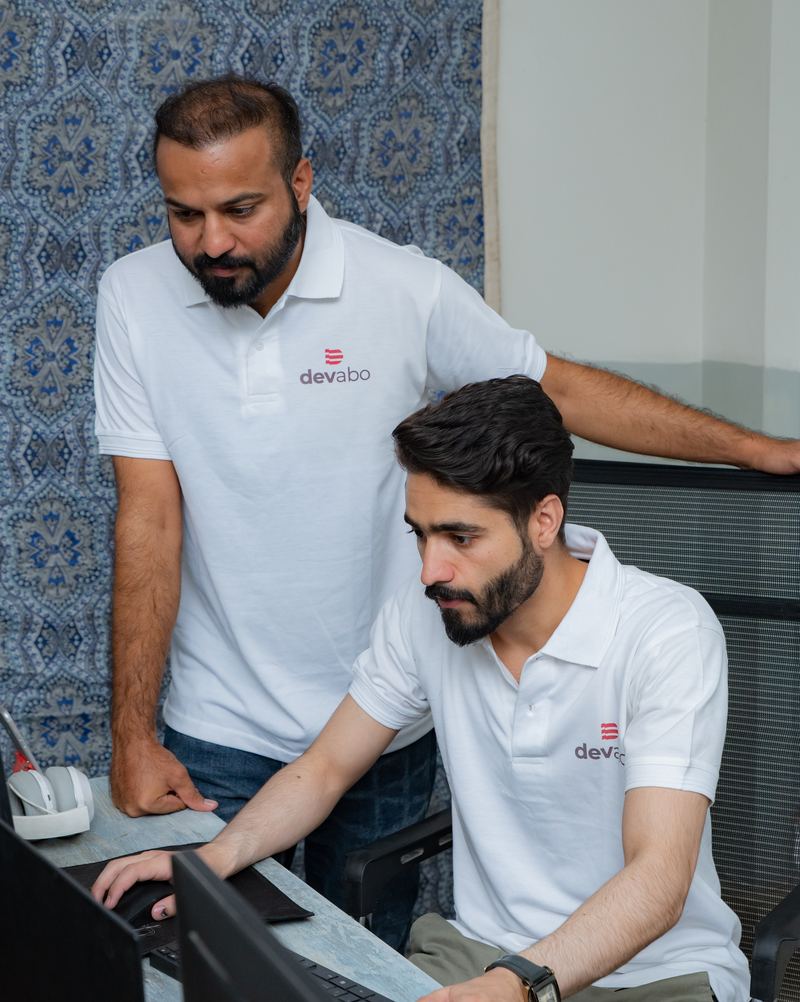
How we work
That is how a small, dedicated team looks after many systems thoroughly. You get the care of your own developer without creating a position for it.
The DevAbo standard
We review against a fixed security standard with 20 points in five areas. It draws on the recommendations of OWASP, the international project for secure web applications, among other sources, and goes further on many points. The assessment rates every area as met, partly met or open and lists the specific findings.
In applications built with AI, we start with the areas marked with a star.
Keys and passwords are kept only where they belong. Sign-in and sessions are secured.
Everyone sees only the data they are allowed to see. Customers and tenants stay cleanly separated.
Whatever comes in from outside is checked before it is processed. Interfaces only hand out what is needed.
Third-party libraries stay up to date and reviewed. Abuse is slowed down, and logs contain no sensitive data.
Before every go-live we check, automatically and by hand, that the standard is met, including from an attacker's point of view.
With the assessment you receive the rating of your system for each area, with the specific findings and the effort needed to fix them.
Request an assessmentQuick check
Eight questions, two minutes. Your answers stay in your browser and are not transmitted.
“Don't know” counts as no. In an emergency it comes to the same thing.
Answer all eight questions and your result will appear here.
Team and locations
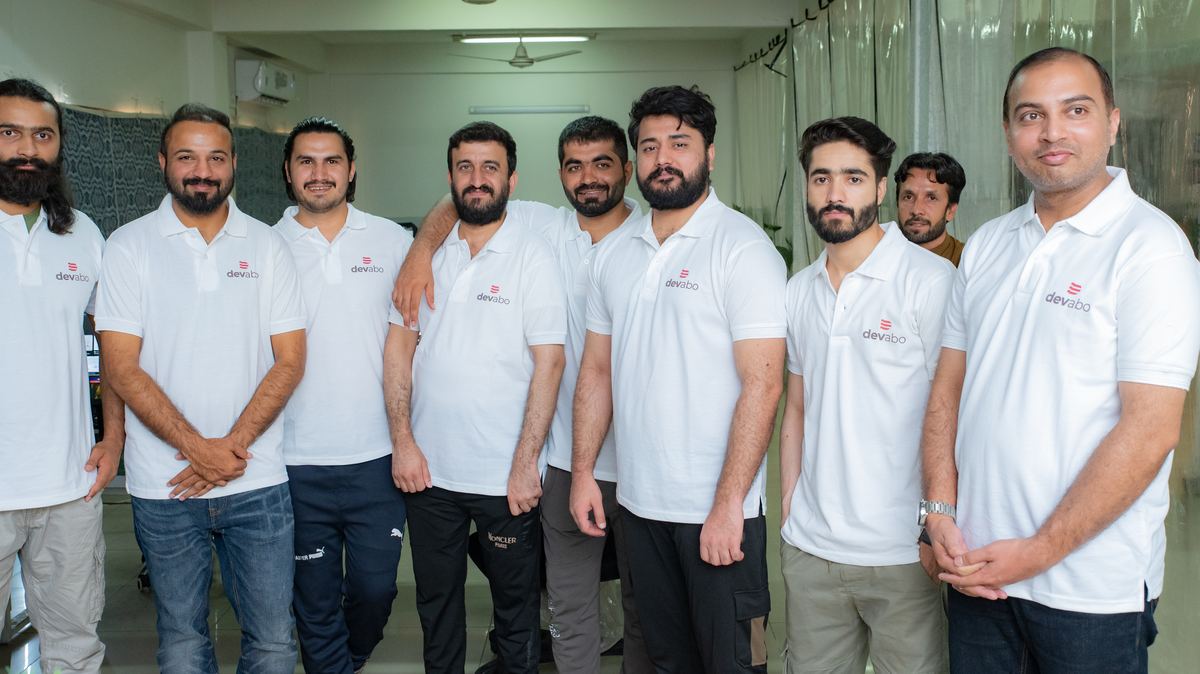
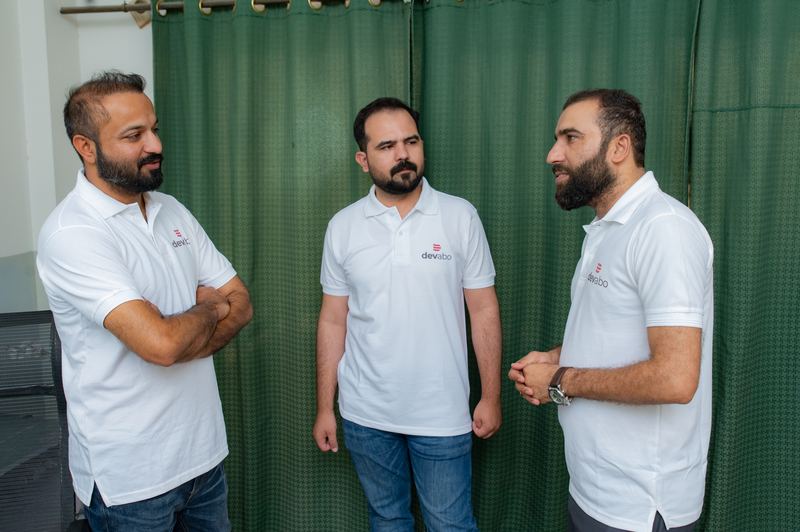
DevAbo is a brand of Y&L Solutions, based in Mannheim, Germany. German law applies, and the place of jurisdiction is Mannheim. Project management and coordination are in German or English; the developers work in English.
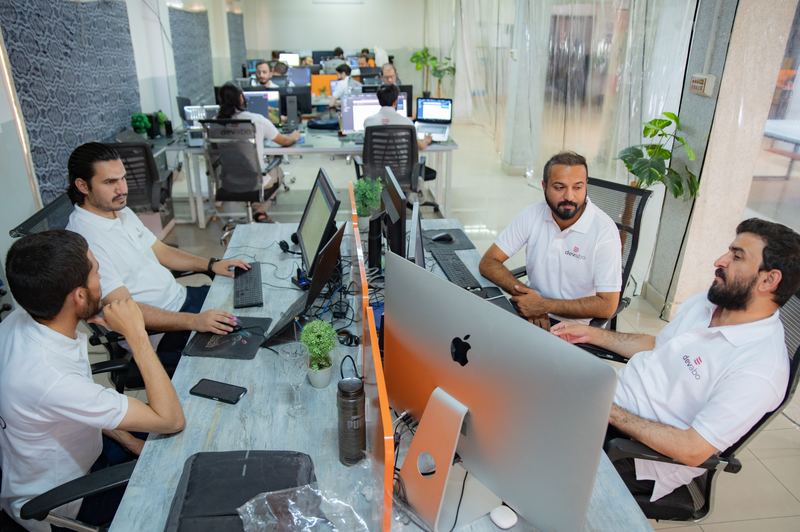
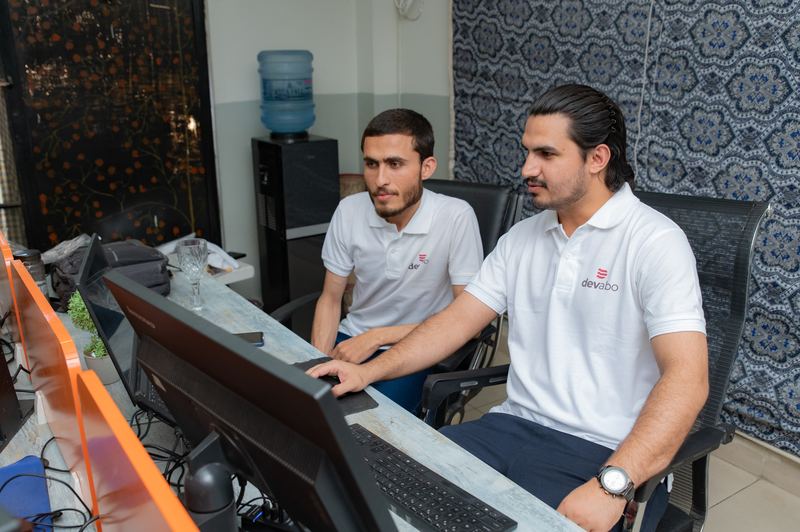
Our team in Islamabad works from 12:00 to 21:00 local time. Pakistan does not change its clocks, so in Germany that is 9:00 to 18:00 in summer and 8:00 to 17:00 in winter.
Akan Yüzügüzel founded Y&L Solutions in Mannheim in 2019. DevAbo has existed since 2023. Interviews with him about DevAbo have appeared in brainGuide, business-on.de, Die Wirtschaft Köln and Onpulson, among others (in German).
Data processing agreement with EU Standard Contractual Clauses, and liability insurance with Hiscox.
FAQ
For prototypes and internal helpers: yes, and that's a good thing. But AI doesn't run operations. It won't get in touch when a vulnerability is published overnight, it isn't liable for anything, and it doesn't know what was changed last year and why if nobody wrote it down. We take on that role, happily alongside your team, which keeps building.
Yes, that is our core business. Agency, freelancer, in-house team or AI: we start with the assessment and document the current state before we change anything.
Most of what runs in mid-sized companies: PHP with WordPress, Laravel, Symfony and Shopware, JavaScript and TypeScript with Node.js, React, Vue and Angular, as well as Python, Java, C# and .NET, mobile apps and databases such as MySQL and PostgreSQL. If there is something we are not good at, we will tell you in the initial call.
With us it includes regular updates of WordPress, plugins, frameworks and server software, ongoing checks of new security advisories with patches within the agreed response time, monitoring and backups with restore tests, an up-to-date system dossier, a fixed allowance for small changes and a monthly report. What happens at the end matters too: the system dossier and the credentials belong to you.
That depends on the number of systems, their condition and the response times you need. A single WordPress site that is kept up to date costs considerably less than a shop with interfaces to an ERP system. After the assessment you get a fixed monthly price.
We check it against the component inventories of all systems we look after and get in touch before you have to ask: whether you are affected, what we propose and when we will do it. We install critical patches within the agreed response time.
Only the developers who look after your system, each with their own account and the minimum permissions needed. You grant and revoke access yourself. We never exchange passwords by chat or email.
Contract and project management are in Mannheim, development takes place in the Islamabad office. We speak German or English with you; the developers work in English.
The assessment is a one-off engagement. Maintenance and developer teams have a minimum term of six months and can then be cancelled monthly. You receive our terms and conditions with every quote.
You receive the complete system dossier, all your credentials back and, if you wish, an orderly handover to your team or another service provider. Code and rights of use are yours once paid in full.
We sign a data processing agreement. Because development takes place in Pakistan, the EU Standard Contractual Clauses apply as well. Wherever possible, we work with test data rather than real customer data.
Yes. If you are looking for dedicated developers for your product, you get them from us as a developer team on subscription, with the same standard as our system maintenance.
Contact
We will get back to you within one business day (Mon–Fri) and tell you openly whether and how we can help.
Call us directly, around the clock. Monday to Friday from 8:00 to 18:00 (German time) we usually get back to you within 15 minutes, at other times within one hour, including nights, weekends and public holidays.